Six frameworks. One view of civilization.

The Philosophies

What is man? What is power for? What must remain beneath truth? These essays follow those questions through government, technology, economics, conflict, creativity, and the physical systems that make civilization possible.

Enter the frameworks

Principles should meet reality at every scale.

These are not isolated collections of opinions. Each begins with human nature and the proper ordering of means and ends. Together they describe a society in which political authority remains bounded, technology remains a tool, energy remains abundant, economic freedom serves productive flourishing, military force remains subordinate to defensible sovereignty, and creativity gives truthful ideas meaningful form.

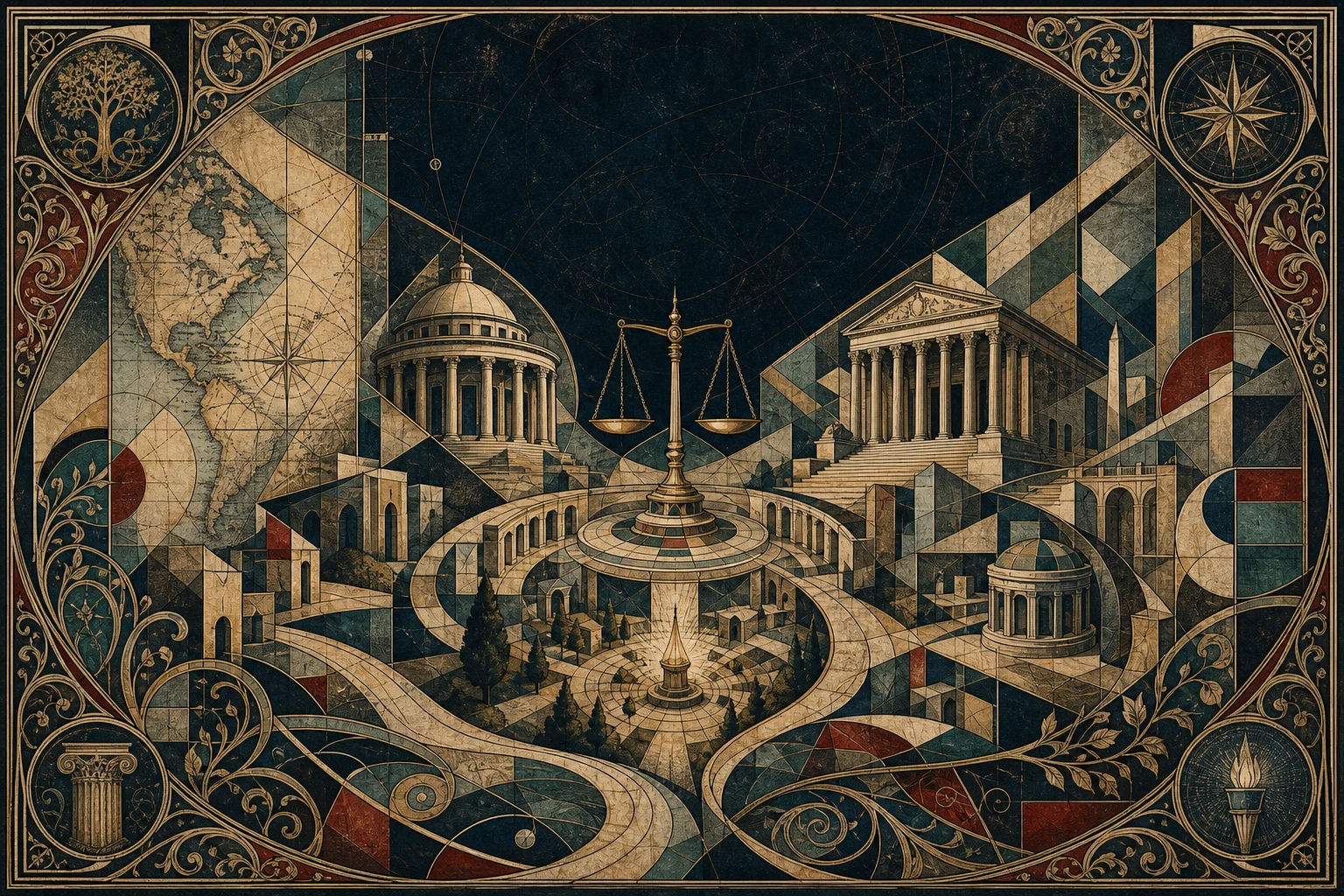
Ornamental cartographic illustration of civic institutions, law, liberty, and political order 01

Government · Liberty · Human Nature

Political
Philosophy

A constitutional, market-oriented, and morally grounded account of political order. It begins with first principles rather than party: objective truth, fallen human nature, divided power, ordered liberty, institutional competence, and the proper limits of government.

First principles before party
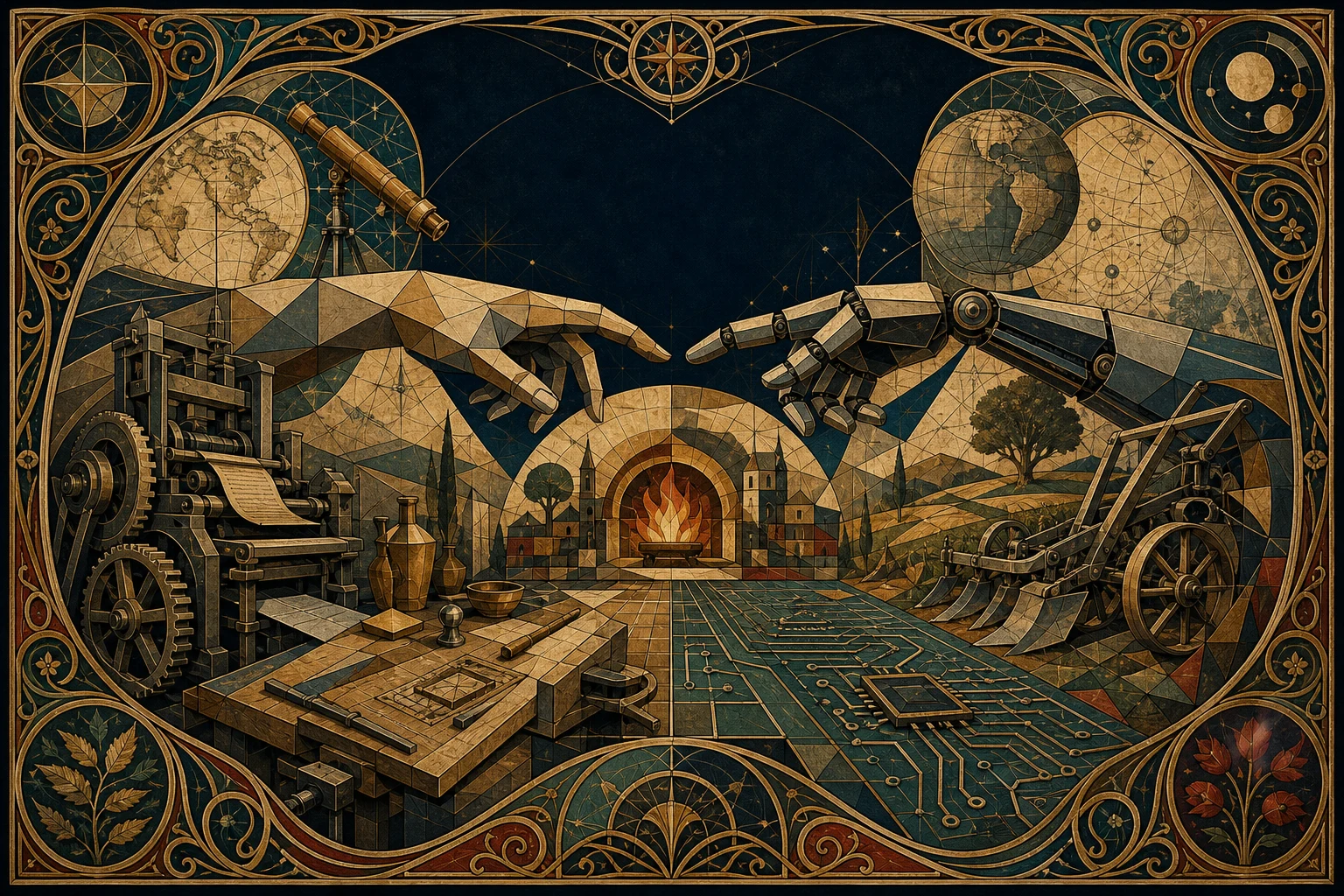
A visual representation of digital technology and human thought 02

Innovation · Agency · Moral Order

Technology
Philosophy

A human-centered framework for artificial intelligence, automation, privacy, markets, work, and digital power. Innovation should be pursued energetically, but every system must remain a means beneath human dignity, moral responsibility, and legitimate authority.

Technology made for man
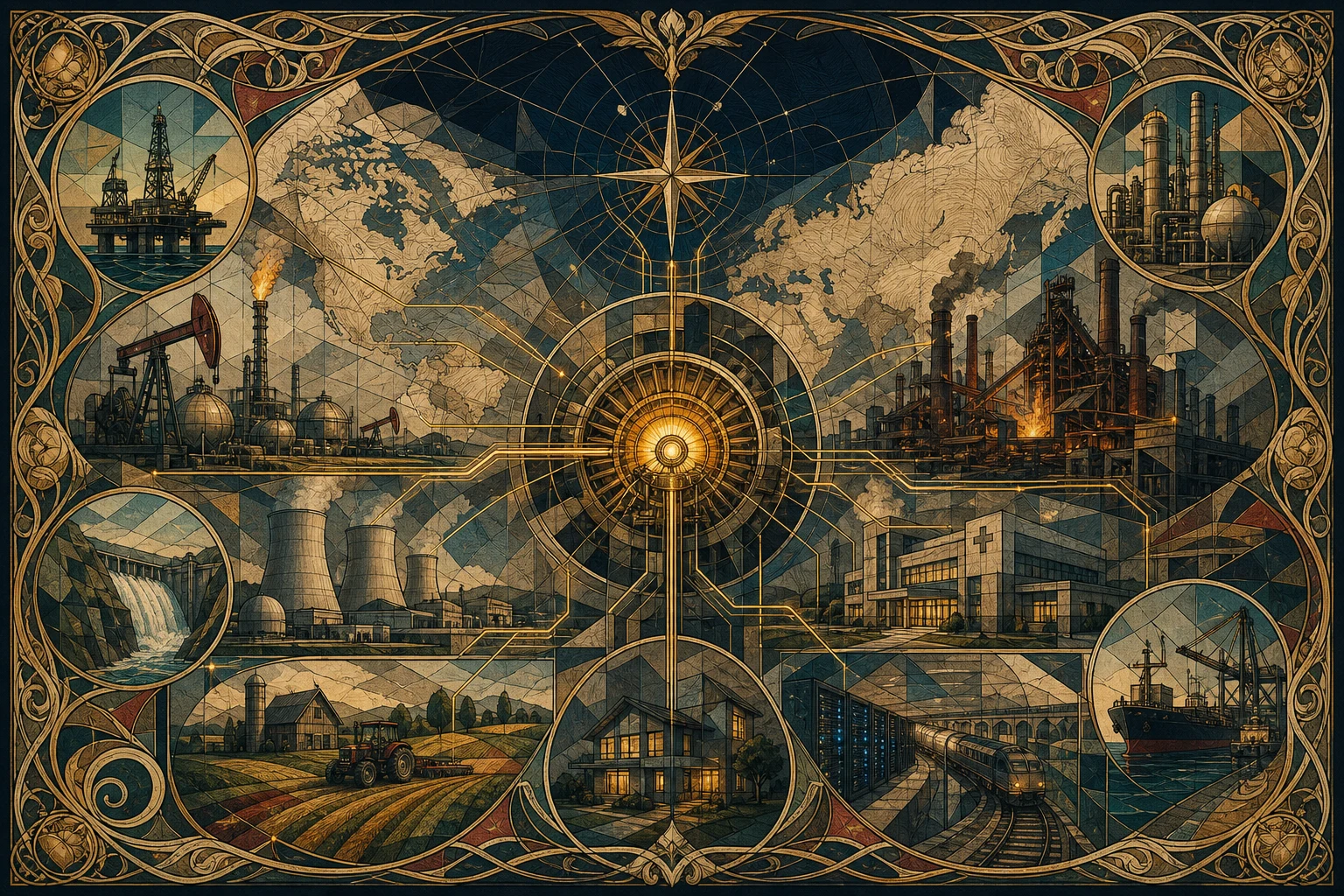
American energy infrastructure representing reliable power and prosperity 03

Abundance · Stewardship · Sovereignty

Philosophy
of Energy

An argument for abundant, reliable, and affordable power as the material foundation of civilization. Energy policy should join responsible stewardship with free markets, resilience, national sovereignty, individual and household prosperity, and confidence in human invention.

Energy should serve life
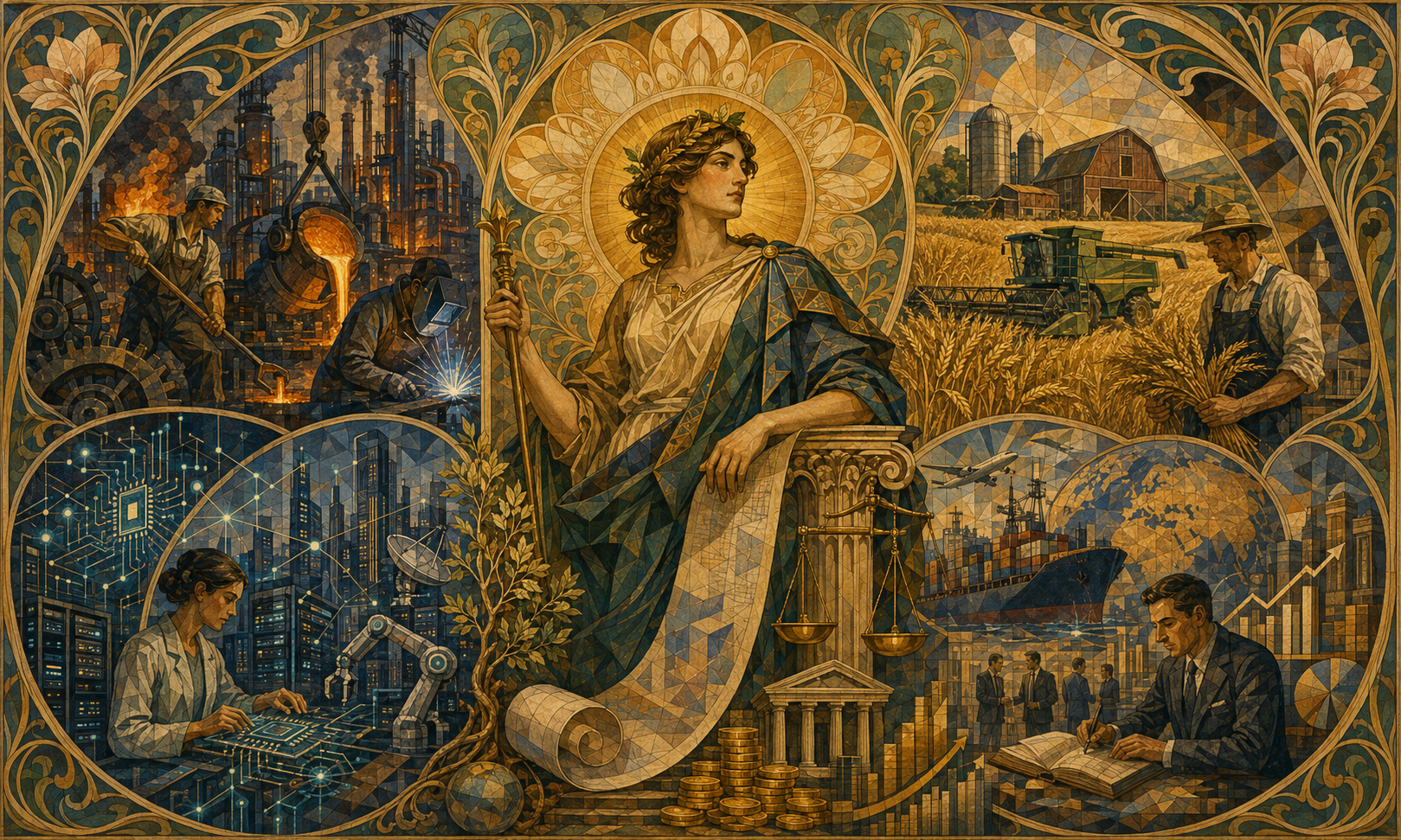
An Art Nouveau mosaic of industry, agriculture, technology, trade, finance, and justice 04

Production · Markets · Stewardship

Economic
Philosophy

A production-first account of prosperity grounded in human nature, decentralized knowledge, private property, prices, capital, competition, sound money, limited government, and economic freedom within a moral order.

Prosperity must be produced
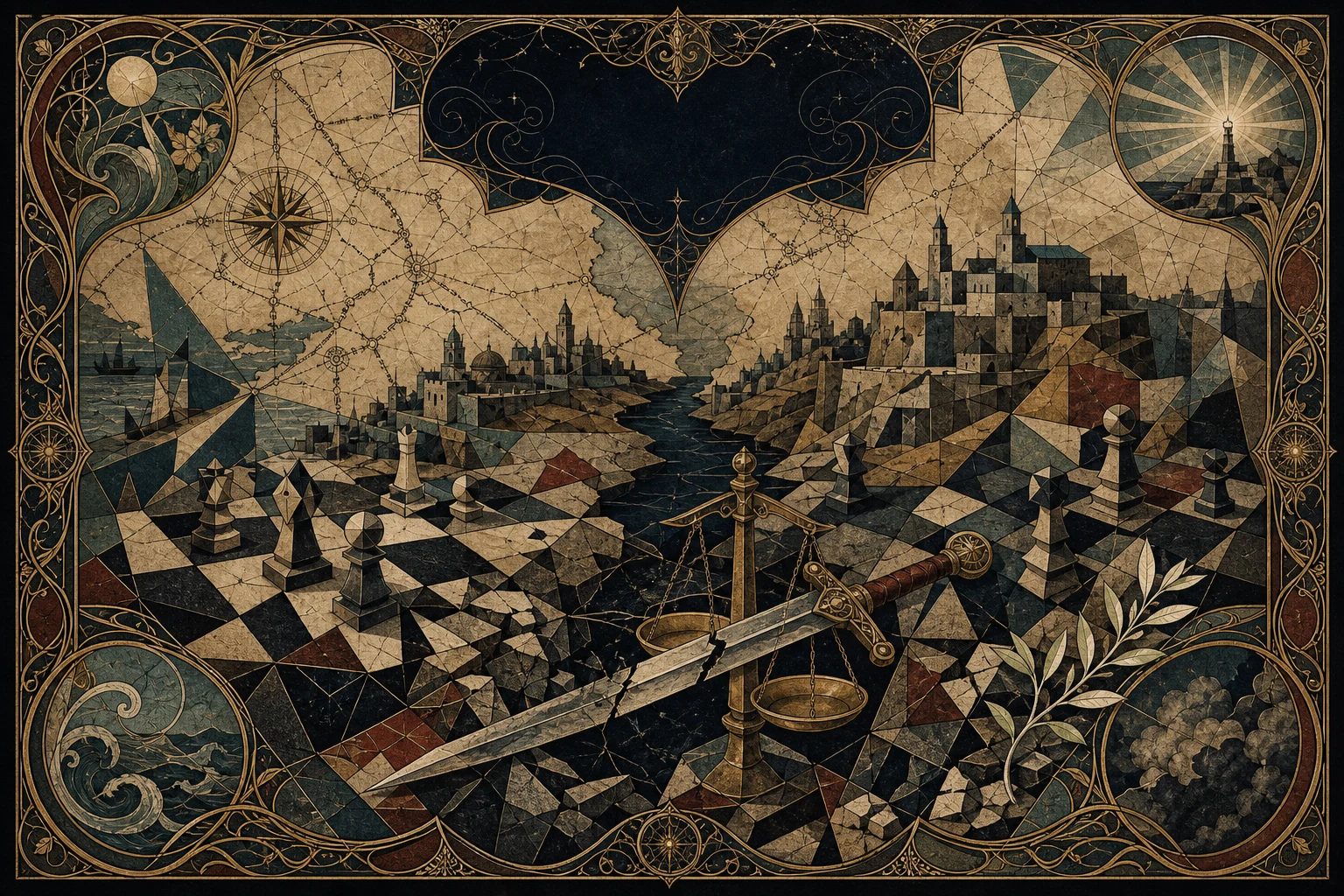
Ornamental campaign map with divided cities, a broken sword, scales, and an olive branch 05

Deterrence · Sovereignty · Survival

Philosophy
of War

A sober philosophy of conflict grounded in fallen human nature, peace through strength, defensible sovereignty, political purpose, moral character, and a civilization’s duty to survive without worshiping either violence or peace at any cost.

Strength in service of civilization
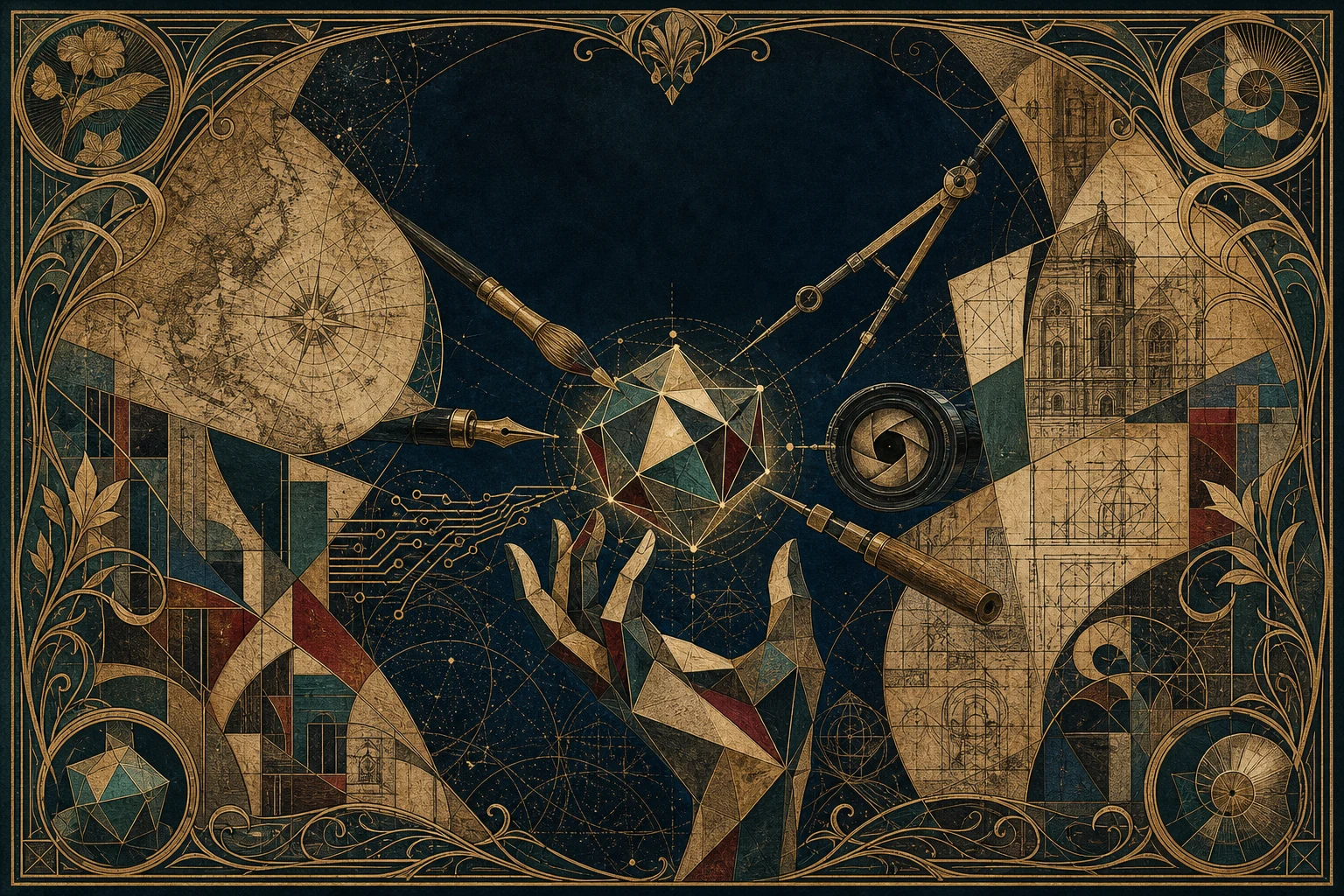
Ornamental cartographic illustration of artistic tools, geometry, architecture, and ideas taking form 06

Truth · Creativity · Communication

Philosophy
of Art

A multidisciplinary philosophy of creativity as the act of making thought visible. Art, writing, software, design, photography, and AI are different media for discovering patterns, communicating meaning, and giving truthful ideas a form another person can experience.

Ideas deserve form

Institutions are tools. Technology is a tool. Energy is power made useful. Economics organizes production and exchange. Military force is an instrument of political survival. Art gives thought a form others can experience. None should become sovereign over the human beings they exist to serve—and mankind remains answerable to an order he did not create.

Explore more in The Abstractions